





Chicago’s Jazz Age Architecture
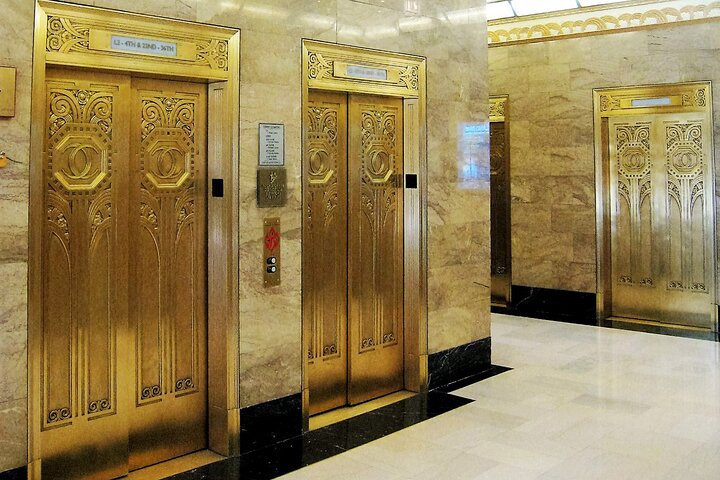
Chicago’s Art Deco architecture dates primarily from the 1920s and 1930s — a period when the city’s building boom produced some of the finest examples of the style in America. Art Deco in Chicago is characterised by vertical emphasis (setback towers, soaring facades), geometric ornamentation (chevrons, zigzags, sunbursts, stylised floral motifs), and rich materials (polished granite, bronze, terra cotta in metallic glazes). An Art Deco tour identifies these buildings and decodes their ornamentation — the visual language of a style that expressed the optimism, the glamour, and the technological confidence of the Jazz Age.
Key Art Deco Buildings
The Carbide and Carbon Building (1929) — a dark green terra-cotta tower with gold-leaf trim, said to be inspired by a champagne bottle. Now the St. Jane Hotel, the building’s lobby is one of Chicago’s most opulent Art Deco interiors.
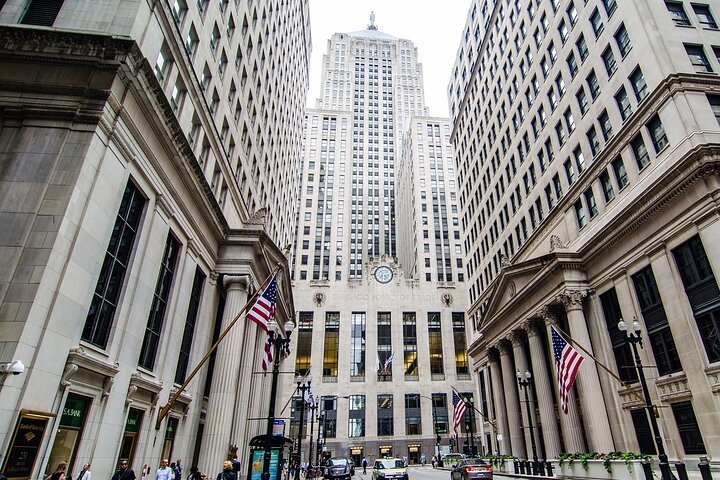
The Chicago Board of Trade Building (1930) — a massive Art Deco tower at the foot of LaSalle Street, crowned by a 31-foot aluminium statue of Ceres (the Roman goddess of grain). The building’s verticality, its setback profile, and its allegorical ornamentation are textbook Art Deco.
The Palmolive Building (1929) — now 919 North Michigan Avenue, an elegant Art Deco tower on the Magnificent Mile with a rotating beacon (the Lindbergh Beacon, decommissioned) on its roof.
The Civic Opera House (1929) — a massive limestone building on the river designed by Graham, Anderson, Probst and White, with an Art Deco interior including a grand foyer and a 3,563-seat auditorium.
Frequently Asked Questions
What is the difference between Art Deco and other Chicago architectural styles?
Art Deco (1920s–1930s) emphasises geometric ornamentation, vertical lines, and rich materials. The earlier Chicago School (1880s–1900s) emphasised structural expression and the steel frame. The later International Style (1950s–1970s) stripped away ornamentation entirely. Art Deco sits between — decorative but modern, vertical but ornamented.
How long is an Art Deco tour?
Typically 2–2.5 hours as a walking tour covering 6–10 buildings in the Loop and the Magnificent Mile. Some tours include interior access to Art Deco lobbies.